
Fluoroplast is a high molecular weight crystalline polymer obtained by chemical means.
Products made from this polymer are used in instrumentation, mechanical engineering, chemical, food, nuclear and medical industries, construction, agriculture and other areas.
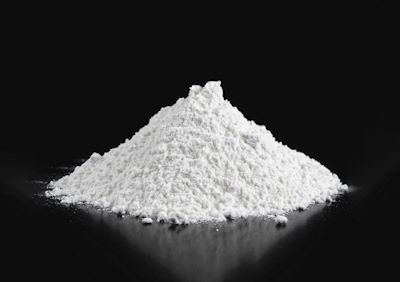
Fluoroplasts are so widely used thanks to their properties – chemical resistance, plasticity, low coefficient of friction, antifriction and antiadhesion properties. Fluoroplasts operate over a wide temperature range.
Different regions have adopted different naming formats: Fluoroplast-4, Polytetrafluoroethylene, Teflon, PTFE.
Fluoroplasts can be used in the form of suspension or emulsion polymerization. Accordingly, fluoroplasts come in crude, thermogranulated, finely ground, powdered, aqueous dispersion, etc.
Technical characteristics of PTFE
| Technical characteristics of PTFE | |
|---|---|
| Density, g/cm3 | 2,12–2,2 |
| Yield strength tensile, MPa | 11,8 |
| Tensile strength, MPa | 14–34 |
| Elongation, % | 250–500 |
| Elastic modulus (compression / tension), MPa | 410/686 |
| Brinell hardness, MPa | 29–39 |
| Heat capacity, J/(kg C) | 1,04 |
| Thermal conductivity, W/(m C) | 0,25 |
| Linear expansion coefficient, deg-1 at temperature, ˚C | |
| 50-110 | 11х10 -5 |
| 120-200 | 15х10 -5 |
| 210-280 | 21х10 -5 |
| Friction coefficient | 0,04 |
| Operating temperature range, °C | –269 to +260 |